
Microsoft’s New Foundation Models Land — What Azure & .NET Engineers Actually Need to Change
TL;DR
Microsoft announced three new foundational AI models in early April 2026. While the headline is about model capability, the real impact for engineers shipping on Azure and .NET is operational: model selection, latency tiers, cost controls, and how you wire these models into production via Azure AI Foundry and Microsoft.Extensions.AI. If you treat this as “just another model upgrade,” you’ll miss the point.
The news, with dates (no hand‑waving)
On April 2, 2026, Microsoft AI announced the release of three new foundational models covering text, voice, and image generation (techcrunch.com). While this announcement predates today by a few days, it’s the most recent platform‑level model release that directly affects Azure customers right now.
Separately, Microsoft has already positioned Azure AI Foundry as the control plane where these models are evaluated, deployed, governed, and monitored, including newer real‑time and multimodal variants introduced earlier this year (techcommunity.microsoft.com).
The key takeaway: this is less about “new shiny models” and more about how Microsoft expects you to run AI in production going forward.
Why this matters if you ship on Azure
1. Model choice is now an architectural decision
With multiple foundation models spanning modalities, Azure teams are expected to mix models by workload, not crown a single default.
Examples:
- Text-heavy, deterministic workflows → smaller or distilled text models
- Voice or real-time UX → low-latency streaming or audio-first models
- Creative or multimodal tasks → higher‑capacity multimodal models
Azure AI Foundry explicitly supports side‑by‑side evaluation of model responses before you switch traffic (techcommunity.microsoft.com). That’s a signal: Microsoft expects frequent model comparisons, not once-a-year migrations.
2. Latency and cost are now first-class knobs
Microsoft’s framing emphasizes inference efficiency as much as raw intelligence (techcrunch.com). Practically, that shows up as:
- Different latency tiers (batch vs. real-time)
- Provisioned vs. consumption deployments
- Clearer tradeoffs between response time and token cost
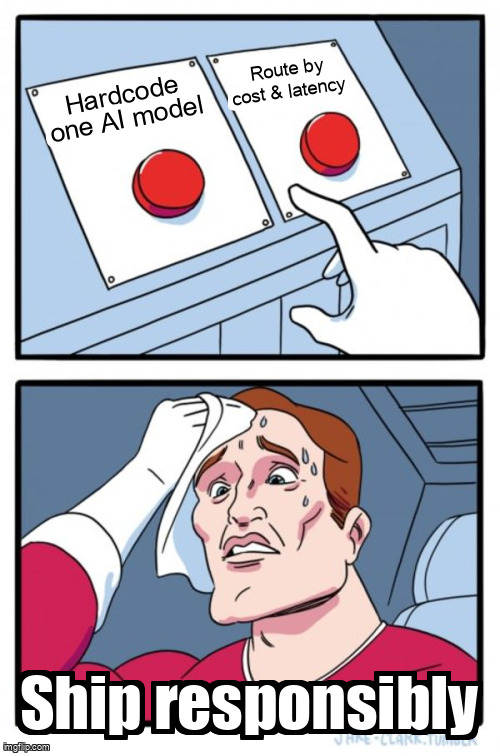
If you’re building APIs, this means you should stop hard-coding a single model name and instead route requests based on SLA.
// Pseudocode using Microsoft.Extensions.AI concepts
var model = request.RequiresRealtime
    ? Models.RealtimeText
    : Models.StandardText;

var response = await aiClient.CompleteAsync(model, prompt);
This pattern is becoming normal, not advanced.
3. Azure AI Foundry is no longer “optional UI”
Earlier Azure OpenAI integrations let teams treat the portal as an afterthought. That’s no longer realistic.
Foundry now bundles:
- Evaluation & regression testing
- Deployment and rollback
- Governance and policy enforcement
- Cross-model comparisons
Microsoft explicitly positions Foundry as the workflow to move from experiments to scalable apps (techcommunity.microsoft.com). If you bypass it entirely, you’re opting out of tooling Microsoft is actively investing in.
What this means specifically for .NET engineers
Good news: .NET is unusually well aligned with this shift.
The Microsoft.Extensions.AI abstractions (now baked into modern .NET AI guidance) are designed for exactly this scenario: swapping models, providers, or deployment types without rewriting your app (devblogs.microsoft.com).
Practical implications:
- Favor interfaces and builders, not concrete SDK calls
- Inject models via configuration, not constants
- Expect more frequent model version updates
If you’re still calling a single Azure OpenAI endpoint directly from controllers… it might be time for a small refactor.
The subtle but important shift
The April 2026 announcement is less about winning a model benchmark and more about normalizing multi-model production systems.
Microsoft is telling engineers:
- Models will change often
- No single model fits all workloads
- Tooling, governance, and evaluation matter as much as tokens
That’s a grown‑up platform story—and a very Azure one.
Final takeaways
- ✅ Treat model selection like infrastructure, not a constant
- ✅ Use Azure AI Foundry for evaluation and governance, not just deployment
- ✅ In .NET, lean on abstractions so model churn doesn’t hurt
- ✅ Optimize for latency and cost, not just “best model”
If you’re already doing this, congrats—you’re ahead of the curve. If not, April 2026 is your nudge.
Further reading
- https://techcrunch.com/2026/04/02/microsoft-takes-on-ai-rivals-with-three-new-foundational-models/
- https://techcommunity.microsoft.com/blog/azure-ai-foundry-blog/new-azure-open-ai-models-bring-fast-expressive-and-real%E2%80%91time-ai-experiences-in-m/4496184
- https://devblogs.microsoft.com/dotnet/dotnet-ai-essentials-the-core-building-blocks-explained/