
The First Week of May 2026: Agents Everywhere, Fewer Free Lunches
TL;DR
The first days of May 2026 made one thing clear: agentic AI is now the default assumption, not an experiment. Azure is standardizing how agents run and scale, GitHub Copilot is tightening the screws on models and usage, and .NET developers are being nudged toward more explicit cost, latency, and lifecycle decisions. This roundup connects the dots and flags what to prep for next.
1. GitHub Copilot trims models and sharpens the meter
On May 1, 2026, GitHub formally announced the upcoming deprecation of GPT‑5.2 and GPT‑5.2‑Codex across Copilot experiences (github.blog). This follows April’s tightening of Individual and Student plans and reinforces a pattern engineers should internalize:
- Model choice is no longer “set and forget.”
- Expect shorter support windows for mid‑tier models.
- Usage accounting (Actions minutes, agent sessions, code review) is getting stricter and more transparent.
What this means for .NET teams
- If you embed Copilot (or rely on it heavily in CI), audit which models your workflows assume.
- Prefer capability‑based fallbacks rather than hardcoding model IDs.
- Budget-wise: assume Copilot is moving from “nice dev perk” to a line item.
Action item: add a quarterly Copilot model audit to your eng backlog.
2. Azure OpenAI: pricing flexibility is now the main feature
Azure’s OpenAI pricing page was quietly updated this week, but the implications are loud: Standard, Provisioned, and Batch are now clearly positioned as architectural choices, not billing tweaks (azure.microsoft.com).
Key points engineers should care about:
| Mode | Why you’d use it |
|---|---|
| Standard | Spiky, unpredictable workloads |
| Provisioned | Low latency, stable throughput, CFO‑approved |
| Batch | 50% cheaper tokens if you can wait (≤24h) |
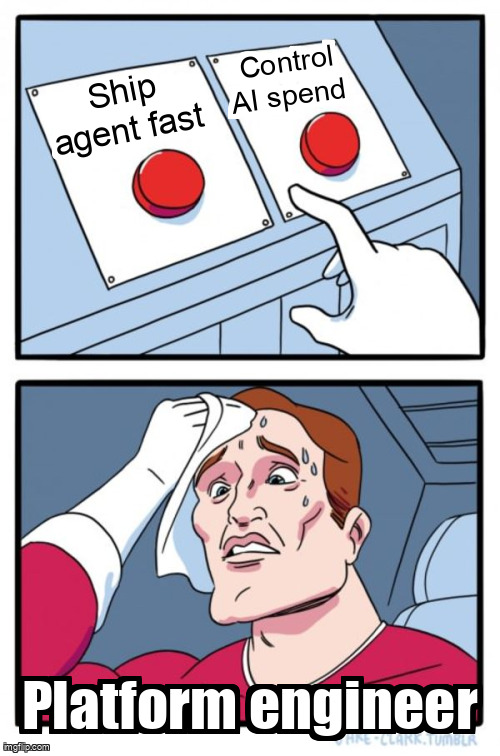
This is Azure signaling that latency and cost must be designed upfront, especially for agents that fan out tool calls.
3. GPT‑5.5 lands in Microsoft Foundry (and that’s strategic)
Microsoft confirmed that GPT‑5.5 is generally available in Microsoft Foundry this week, positioning it as the default “frontier” option for enterprise agent workloads (azure.microsoft.com).
Why this matters beyond the model bump:
- Foundry is becoming the control plane for model lifecycle, safety, and scaling.
- GPT‑5.5 continues the trend toward unified reasoning + speed, reducing the need for multi‑model orchestration.
- This aligns neatly with Azure’s Provisioned throughput story.
Practical takeaway If you’re building agents on Azure in 2026, Foundry is the happy path. Swimming against it will work… but feel like self‑hosted Kubernetes in 2017.
4. Agent Framework 1.0: .NET finally gets a “boring” agent SDK
Late April but very relevant to this week’s announcements, Microsoft Agent Framework 1.0 shipped with first‑class .NET and Python SDKs (techcommunity.microsoft.com).
Why engineers are relieved:
- Explicit state handling
- Predictable orchestration
- Fewer “magic prompts”, more contracts
This is clearly the intended successor path for teams that experimented with Semantic Kernel but now need production guardrails.
Integration sketch (C#‑ish)
var agent = new AgentBuilder()
    .WithModel("gpt-5.5")
    .WithTools(sqlTool, httpTool)
    .WithPolicy(Timeouts.Strict)
    .Build();
Boring? Yes. And that’s the compliment.
5. The bigger picture: exclusivity is over, responsibility is back
VentureBeat’s report on Microsoft and OpenAI loosening their long‑standing exclusivity deal frames the macro shift well (venturebeat.com). Azure is no longer “the only place” for OpenAI models—and that means:
- Azure must win on operational excellence, not access.
- Developers must be ready for multi‑model, multi‑vendor futures.
- Abstractions like
Microsoft.Extensions.AImatter more than ever.
In other words: portability is back on the exam.
What to prep next (Sunday homework)
- Inventory agents: where do they run, which models, what throughput?
- Decide on pricing modes (Standard vs Provisioned) before load testing.
- Abstract model IDs in .NET using
Microsoft.Extensions.AI. - Track deprecations monthly, not annually—Copilot proved why.
The AI stack in 2026 isn’t chaotic—it’s opinionated. The trick is learning which opinions are now non‑negotiable.
Further reading
- https://github.blog/changelog/2026-05-01-upcoming-deprecation-of-gpt-5-2-and-gpt-5-2-codex/
- https://azure.microsoft.com/en-us/pricing/details/azure-openai/
- https://azure.microsoft.com/en-us/blog/openais-gpt-5-5-in-microsoft-foundry-frontier-intelligence-on-an-enterprise-ready-platform/
- https://techcommunity.microsoft.com/blog/azuredevcommunityblog/the-future-of-agentic-ai-inside-microsoft-agent-framework-1-0/4510698
- https://venturebeat.com/technology/microsoft-and-openai-gut-their-exclusive-deal-freeing-openai-to-sell-on-aws-and-google-cloud