
Azure.AI.OpenAI for .NET Catches Up to OpenAI 2.0 — What the New SDK Drop Means in Practice
TL;DR: A small-looking update to the Azure.AI.OpenAI .NET SDK landed in the last couple of days, but it matters. The library now aligns with OpenAI 2.0 beta APIs and the 2024-07-01-preview Azure OpenAI service version, reducing drift, unblocking newer features, and slightly changing how you should think about client setup and future upgrades. If you ship AI features on .NET, this is one of those “update now, thank yourself later” moments.
The update that quietly unblocks a lot
On May 9–10, 2026, the Azure SDK team updated Azure.AI.OpenAI to be compatible with OpenAI 2.0.0‑beta.9 and the 2024-07-01-preview Azure OpenAI API version (github.com).
That sounds minor. It isn’t.
For the past few months, many teams have been stuck in an awkward middle ground:
- Azure OpenAI exposing newer preview capabilities
- OpenAI upstream SDKs moving to 2.x
- .NET developers pinned to older Azure client semantics
This update realigns those layers so you’re no longer papering over differences with adapters and TODO comments.
What actually changed (from a .NET engineer’s POV)
1. API shape convergence
The Azure client now tracks the same conceptual model as OpenAI 2.x: clearer separation between clients, requests, and response types, and fewer “magic” overloads.
If you’ve been following OpenAI’s newer SDKs, this will feel familiar instead of… creative.
var client = new OpenAIClient(
    new Uri(endpoint),
    new AzureKeyCredential(apiKey));

var response = await client.GetChatCompletionsAsync(
    deploymentName,
    new ChatCompletionsOptions
    {
        Messages =
        {
            new ChatMessage(ChatRole.System, "You are a helpful assistant."),
            new ChatMessage(ChatRole.User, "Summarize this PR.")
        }
    });
No behavioral fireworks here—just less impedance mismatch going forward.
2. Preview API version is now the expected path
The SDK explicitly targets 2024-07-01-preview, which is also the version where most of the newer Azure OpenAI features are lighting up in documentation (learn.microsoft.com).
Translation:
- ✅ New features show up sooner
- ⚠️ You should expect some churn
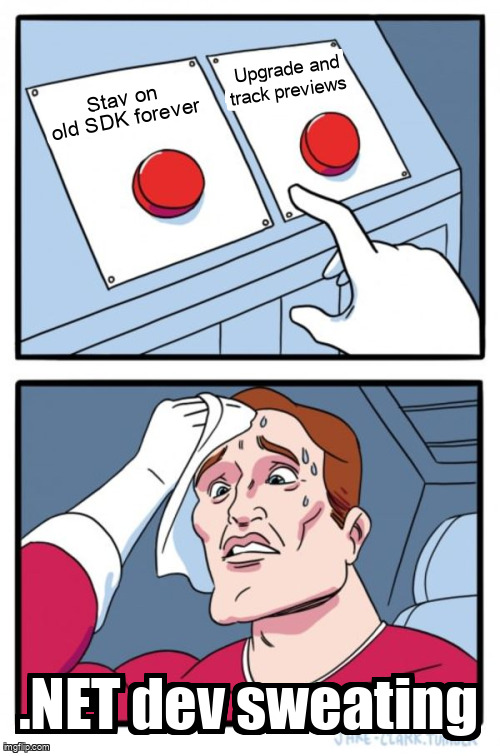
- ❌ Staying on old stable versions means falling behind faster than before
This is Microsoft gently saying: preview is the new normal for AI.
3. Cost and latency: no surprises (good news)
There are no pricing or latency regressions tied to this SDK update itself. Billing is still governed by the underlying Azure OpenAI deployment and model choice, not the client library (learn.microsoft.com).
That means:
- Upgrading the SDK is operationally low-risk
- You don’t need a finance sign‑off meeting (always a win)
Integration checklist for existing apps
If you’re upgrading from an older Azure.AI.OpenAI package:
- Update the NuGet package
dotnet add package Azure.AI.OpenAI -
Search for deprecated overloads
Some convenience methods still exist, but the direction is clearer, more explicit request objects. -
Verify your API version expectations
If you hard-coded an older service version anywhere, remove it and let the SDK manage alignment. - Add light test coverage around prompts
Not because behavior changed—but because previews can.
How this fits the bigger .NET AI picture
This update lines up with Microsoft’s broader direction:
- Unified abstractions via Microsoft.Extensions.AI (devblogs.microsoft.com)
- Faster iteration through previews instead of long stable gaps
- Less divergence between Azure-hosted and upstream OpenAI APIs
The practical effect: fewer “Azure-only” quirks and more transferable AI code across environments.
Bottom line
This isn’t a flashy launch, but it’s a foundational fix.
If your .NET app talks to Azure OpenAI and you plan to keep adding AI features in 2026, you should upgrade, test, and move on. The longer you wait, the more painful the jump gets.
Sometimes the most important AI news is the one that removes friction instead of adding features.
Further reading
- https://github.com/Azure/azure-sdk-for-net/blob/main/sdk/openai/Azure.AI.OpenAI/CHANGELOG.md
- https://learn.microsoft.com/en-us/azure/foundry-classic/openai/whats-new
- https://devblogs.microsoft.com/dotnet/dotnet-ai-essentials-the-core-building-blocks-explained
- https://devblogs.microsoft.com/dotnet/category/ai/