
Azure AI Foundry Quietly Became the Default Control Plane for Shipping AI on .NET
TL;DR
Over the last week, Azure AI Foundry crossed an important line: it’s no longer just “where models live,” it’s the control plane for cost, latency, governance, and multi‑model orchestration. If you’re shipping AI features from .NET on Azure in 2026, Foundry is the thing you end up standardizing on—even if you didn’t plan to.
The focused update that matters
While there wasn’t a single splashy keynote on May 10–12, 2026, several closely related updates landed or were reaffirmed across Microsoft’s own channels that, together, change day‑to‑day engineering decisions:
- Microsoft Foundry now hosts multiple first‑ and third‑party frontier models side‑by‑side (OpenAI GPT‑5.x variants, DeepSeek, Qwen, IBM Granite, NVIDIA Nemotron), with a consistent deployment, eval, and governance surface (techcommunity.microsoft.com).
- OpenAI’s GPT‑5.5 Instant / chat‑latest continues rolling through Foundry as the default low‑latency chat option, positioned explicitly for production workloads rather than experimentation (techcommunity.microsoft.com).
- Microsoft’s own guidance now frames Foundry as the place to move from “model capability” to system design and orchestration—a subtle but important shift in messaging (techcommunity.microsoft.com).
Individually, none of this is shocking. Collectively, it changes how .NET and Azure teams should think about AI architecture.
Why this matters to .NET engineers (not just platform teams)
1. Model choice is no longer a compile‑time decision
Foundry treats models as deployable resources, not SDK dependencies. For .NET teams, this means:
- You code against Azure OpenAI / Foundry endpoints, not a specific model brand.
- Swapping GPT‑5.5 Instant for a cheaper or faster alternative becomes a configuration change, not a redeploy.
That’s a meaningful shift from the 2024–2025 pattern of hard‑coding model IDs into appsettings.
var client = new OpenAIClient(
    new Uri(endpoint),
    new AzureKeyCredential(key));

var response = await client.GetChatCompletionsAsync(
    deploymentName: "chat-prod",
    chatCompletionsOptions);
The interesting part is that chat-prod can now map to different underlying models over time—without touching this code.
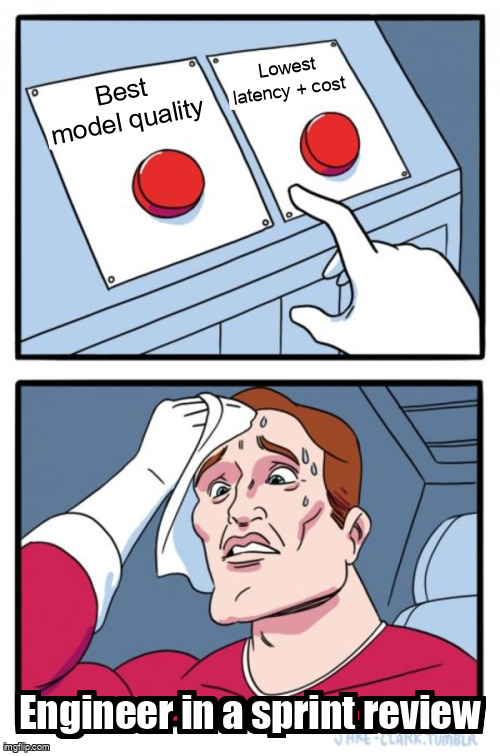
2. Cost engineering is becoming a first‑class skill
Microsoft’s own Foundry blog posts increasingly emphasize cost/latency tradeoffs rather than raw capability (techcommunity.microsoft.com). Practically, that means:
- Fast, smaller models for UI‑bound interactions.
- Heavier reasoning models reserved for background jobs or agent workflows.
- Explicit evaluation runs before promoting a model to production.
If this feels familiar, that’s because it looks a lot like how we already treat SKUs in Azure App Service or SQL tiers. AI is catching up to “normal cloud economics.”
3. Foundry is where governance actually happens
The marketing phrase “responsible AI” often gets hand‑waved, but Foundry bakes in things that matter to enterprise .NET shops:
- Centralized deployment approval
- Model‑level access controls
- Evaluation artifacts tied to specific versions
This aligns closely with Microsoft’s broader narrative about agentic systems and orchestrated workflows rather than ad‑hoc prompt usage (blogs.microsoft.com).
In other words: Foundry is where your security review will eventually point you anyway.
Practical integration steps (today, not someday)
If you’re shipping AI features on Azure in mid‑2026, a pragmatic baseline looks like this:
- Deploy models via Foundry, not directly via ad‑hoc Azure OpenAI resources.
- Abstract deployment names (
chat-prod,reasoning-bg) from model identities. - Add evaluation runs before model switches—even simple latency + cost checks.
- Treat AI usage like any other Azure resource: budgets, alerts, owners.
None of this requires exotic tooling. It mostly requires resisting the urge to “just call the model.”
The bigger picture (without hype)
Microsoft’s recent messaging around “Frontier Firms” and agent orchestration isn’t aimed at convincing you that AI is magical. It’s aimed at normalizing AI as infrastructure—governed, measured, and optimized like everything else (blogs.microsoft.com).
Azure AI Foundry is the concrete expression of that idea for engineers.
If you’re on .NET and Azure, the question isn’t whether you’ll standardize on it—but how early you do it, before your architecture calcifies.
Further reading
- https://techcommunity.microsoft.com/category/azure-ai-foundry/blog/azure-ai-foundry-blog
- https://techcommunity.microsoft.com/blog/azure-ai-foundry-blog/new-azure-open-ai-models-bring-fast-expressive-and-real%E2%80%91time-ai-experiences-in-m/4496184
- https://blogs.microsoft.com/blog/2026/05/05/how-frontier-firms-are-rebuilding-the-operating-model-for-the-age-of-ai/
- https://azure.microsoft.com/en-us/blog/content-type/announcements/