
Sunday Signals: Azure AI v1 APIs, Copilot Agents Go REST, and What .NET Teams Should Prep Next
TL;DR
This week’s AI news for .NET and Azure engineers is all about stabilization and scale: Azure OpenAI’s v1 API lifecycle tightens contracts and auth, Foundry model management adds safer upgrades, and GitHub Copilot agents quietly become automatable via REST. Translation: fewer preview surprises, more production knobs—and a nudge to clean up your 2025-era integrations before they bite back.
1) Azure OpenAI v1 API: Fewer Version Headaches, Cleaner Auth
Microsoft updated the Azure OpenAI v1 API lifecycle docs with guidance that matters in real systems: v1 removes dated api-version parameters, simplifies authentication, and supports cross‑provider model calls under Microsoft Foundry. This is not flashy—but it’s the kind of change that reduces integration churn and pager fatigue. (learn.microsoft.com)
Why engineers should care
- Operational stability: Fewer breaking changes tied to date-stamped versions.
- Security posture: Cleaner Entra ID auth paths alongside API keys.
- Portability: Cross‑provider calls hint at a more flexible future for model sourcing.
Practical takeaway
If you’re still pinning api-version=2024-xx-xx everywhere, plan a sprint to migrate critical paths to v1. Treat it like a schema migration: test, stage, then flip.
POST https://{resource}.openai.azure.com/openai/v1/chat/completions
Authorization: Bearer {entra_token}
2) Foundry Model Management: Automatic Updates (With Guardrails)
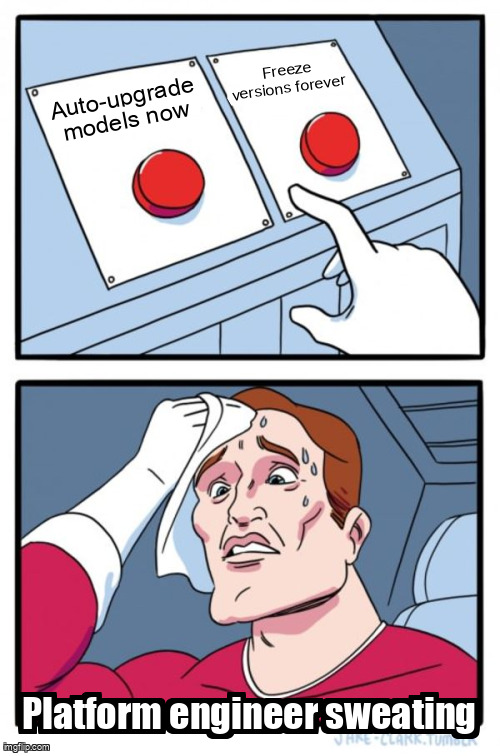
A quiet but impactful update to working with models in Microsoft Foundry explains how to list available models, configure automatic model updates, and control deployment upgrade policies. This landed days ago and directly addresses the “surprise model change” anxiety many teams felt in 2025. (learn.microsoft.com)
Why engineers should care
- Cost & latency control: Different models, different price/latency envelopes.
- Predictability: Explicit upgrade policies beat silent swaps.
- Region awareness: Availability still varies—now easier to inspect programmatically.
Practical takeaway Set upgrade policies explicitly. Automatic updates are fine—if you’ve got evals and rollback paths.
3) Copilot Agents Get a REST Doorway (Yes, Really)
Buried in the GitHub Changelog this week: you can now start Copilot cloud agent tasks via REST, alongside auto model selection and unified agent sessions rolling out across IDEs. This pushes Copilot from “IDE helper” toward pipeline-friendly automation. (github.blog)
Why engineers should care
- CI/CD integration: Trigger refactors, reviews, or doc updates from pipelines.
- Cost visibility: Usage-based billing reports are now easier to align with automation.
- Latency trade-offs: Cloud agents are powerful—but async by nature.
Practical takeaway Experiment with non-blocking tasks first (docs, tests, mechanical refactors). Don’t put an agent on the critical path of a hotfix deploy. Yet.
4) Azure Announcements: GPT‑5.5 in Foundry (Enterprise Framing)
The Azure announcements feed highlights OpenAI’s GPT‑5.5 becoming generally available in Microsoft Foundry, framed squarely for enterprise agent workloads. Details are light, but the signal is clear: Foundry is the long-term control plane for serious AI on Azure. (azure.microsoft.com)
Why engineers should care
- Roadmap gravity: New models land in Foundry first.
- Governance: Expect tighter links to evals, policies, and cost controls.
- Migration pressure: “Classic” Azure OpenAI won’t be the center forever.
Practical takeaway If you’re still on legacy Azure OpenAI resources, start mapping a Foundry upgrade path in 2026 planning—before it becomes urgent.
What to Prep Next (2026 Readiness)
- Audit your APIs: Move to Azure OpenAI v1 where possible.
- Codify model policies: Automatic updates + evals > manual surprises.
- Pilot agent automation: Keep humans in the loop, but wire the loop.
- Budget realism: More agents ≠ free productivity. Measure outputs, not tokens.
Sunday takeaway: this wasn’t a “wow” week—it was a foundation week. And foundations are what keep production systems upright.
Further reading
- https://learn.microsoft.com/en-us/azure/foundry/openai/api-version-lifecycle
- https://learn.microsoft.com/en-us/azure/foundry/openai/how-to/working-with-models
- https://github.blog/changelog/
- https://azure.microsoft.com/en-us/blog/content-type/announcements/