
Claude Opus 4.8 Lands in Azure AI Foundry—and It Changes Multi‑Model Strategy for .NET Teams
TL;DR
On May 28, 2026, Microsoft made Claude Opus 4.8 available inside Azure AI Foundry, expanding Azure’s first‑party, multi‑model lineup beyond OpenAI models. For .NET and Azure engineers, this means model choice without platform hopping, cleaner abstractions via the Azure AI SDKs, and more leverage when balancing cost, latency, and reasoning quality—all from the same control plane. (azurecharts.com)
What actually shipped (and when)
Azure’s May 28 update added Claude Opus 4.8 as a selectable model in Microsoft Foundry / Azure AI Foundry. This wasn’t a teaser or a lab preview—it showed up in the official Azure updates feed, signaling production intent. (azurecharts.com)
Why that matters: until recently, using Anthropic models often meant leaving Azure (or wiring together custom networking, auth, and billing). Foundry’s promise is one platform, many frontier models. This update is a concrete step toward that promise.
Why .NET and Azure engineers should care
1. Multi‑model without multi‑plumbing
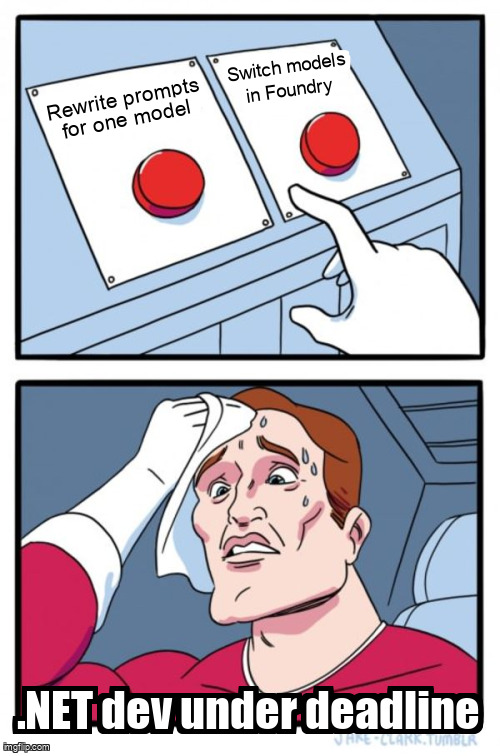
Azure AI Foundry sits behind a consistent API surface. From a .NET app, you can swap models (OpenAI, Anthropic, others as they arrive) without rewriting your entire inference layer.
That reduces:
- Vendor lock‑in pressure (you can choose per workload)
- Integration tax (auth, networking, logging stay the same)
- Operational sprawl (one place for quotas, monitoring, and governance)
This aligns with Microsoft’s broader push toward a unified developer surface across Azure and GitHub tooling, as reflected in the Microsoft Developer changelog cadence this week. (developer.microsoft.com)
2. Cost and latency trade‑offs get explicit
Claude Opus is typically positioned for strong reasoning and long‑context tasks. In practice, that means you now have a first‑class option in Azure when:
- GPT‑style models are fast but shallow for your task
- You need fewer retries or less prompt scaffolding
- The total cost per successful task matters more than per‑token price
Engineers can A/B this inside Azure instead of arguing about it in design docs.
3. Cleaner architecture for agentic workloads
If you’re already experimenting with agents (and Build 2026 messaging suggests you are), this matters more than raw chat scenarios. Agents often:
- Call tools
- Maintain state
- Run longer chains
Being able to pick a higher‑reasoning model for planning steps—and a cheaper model for execution—from the same Foundry environment simplifies orchestration and deployment.
What it looks like from .NET (conceptually)
You don’t need a brand‑new SDK. The May 2026 Azure SDK releases already include steady updates across Azure AI packages, signaling that model expansion is expected, not exceptional. (azure.github.io)
Conceptually, the pattern is:
var client = new AzureAIClient(new Uri(endpoint), credential);

var response = await client.Completions.RunAsync(
    model: "claude-opus-4.8",
    prompt: prompt,
    options: new()
    {
        MaxTokens = 2048,
        Temperature = 0.2
    });
The interesting part isn’t the code—it’s that the model name becomes a configuration choice, not an architectural fork.
Practical guidance before you flip the switch
- Benchmark with your real prompts. Reasoning models shine on some workloads and overkill others.
- Watch quotas and regional availability. New models often start region‑limited.
- Design for model polymorphism. Treat models like infrastructure, not business logic.
- Log outcomes, not just tokens. Success rate per task is the metric that matters.
The bigger signal
This update fits a broader 2026 pattern: Azure is positioning itself as a neutral control plane for frontier models, not just “the place where OpenAI lives.” For teams shipping production AI on .NET, that’s a strategic shift worth taking seriously—because it changes how permanent any single model decision really is.
Further reading
- https://azurecharts.com/updates?monthback=0
- https://developer.microsoft.com/en-us/changelog
- https://azure.github.io/azure-sdk/releases/2026-05/dotnet.html