
Sunday Signal: Agents Go Mainstream, Billing Gets Real, and Azure AI Grows Up
TL;DR
This week’s AI news for .NET and Azure engineers is less about shiny demos and more about shipping responsibly: agent frameworks hit GA, Copilot moves fully to usage-based billing, and Azure/Microsoft Foundry doubles down on observability and ROI. If you’re building AI into production systems in 2026, cost controls, telemetry, and integration choices just became first‑class design constraints.
1) GitHub Copilot SDK is GA — agents are now embeddable
GitHub quietly crossed a major line on June 2: the Copilot SDK is now generally available, letting you embed Copilot’s agentic engine directly into your own tools and services, not just IDEs. This isn’t “autocomplete-as-a-service”; it’s task-oriented agents with a stable API surface and production support. (github.blog)
Why it matters to .NET/Azure teams
- You can now host Copilot-like agents inside internal developer portals, CI tools, or ops dashboards.
- Language coverage includes C#-friendly ecosystems, making it realistic to wrap this behind ASP.NET or minimal APIs.
- Expect tighter coupling with GitHub identity and permissions—great for governance, but plan auth early.
Practical takeaway If you’ve been faking agents with prompt glue, start evaluating whether Copilot SDK reduces that plumbing—especially for internal tools where GitHub auth is already a given.
2) Copilot billing flips fully to usage-based (no more hand-waving)
As of June 1, 2026, all GitHub Copilot plans are billed on AI Credits tied to token usage, with new per-user budget controls. This includes chat, code review, and agentic features. (github.blog)
Engineering implications
- Cost is now proportional to actual model usage, not seat count alone.
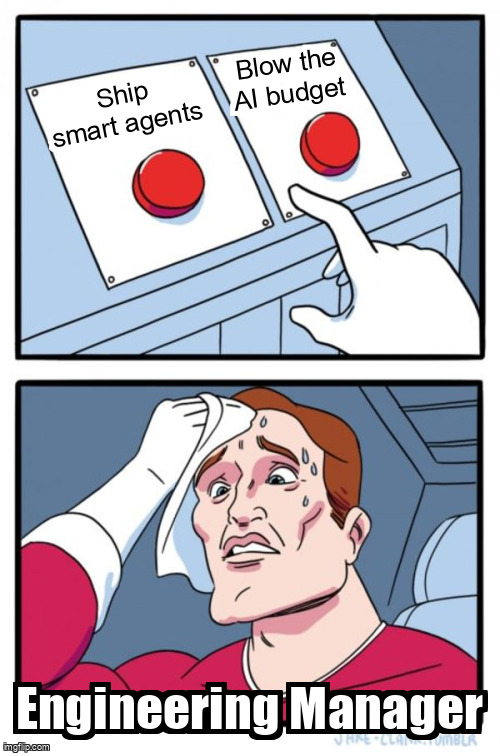
- Agents that loop, retry, or over‑verbose can quietly burn credits.
- FinOps for AI is no longer optional.
What to do Monday
- Add token and credit telemetry to dashboards (even if it’s “temporary”).
- Set org-level budgets before enabling autonomous agents in CI or PR review.
- Treat prompts like performance-critical code paths.
3) Microsoft Agent Framework: from preview toy to real SDK
At Build 2026, Microsoft announced significant updates to the Microsoft Agent Framework (MAF), its open-source SDK for building single- and multi-agent systems across .NET and Python. New components like Agent Harness and hosted agents push it closer to production readiness. (devblogs.microsoft.com)
Why MAF is interesting (finally)
- Same abstractions across .NET and Python reduce polyglot pain.
- Plays nicely with Azure Functions and durable workflows.
- Explicit focus on tools, memory, and multi-step orchestration.
.NET angle
If you’re already using Microsoft.Extensions.* patterns, MAF feels familiar: dependency injection, middleware, and composability instead of prompt spaghetti.
4) Azure AI Foundry: observability and ROI take center stage
One of the most engineer-relevant Build posts wasn’t about models—it was about keeping agents sane in production. Azure AI Foundry now emphasizes end-to-end observability, evaluation, and business ROI for non-deterministic systems. (devblogs.microsoft.com)
Key points
- Agents drift over time as models, tools, and data change.
- Foundry adds lifecycle telemetry: every step, tool call, and decision.
- Quality, safety, and cost can be evaluated continuously—not just at demo time.
Design tip Treat AI agents like distributed systems:
- Logs, traces, and metrics are mandatory.
- Version prompts and tools like APIs.
- Assume yesterday’s “good” behavior can regress tomorrow.
5) Copilot becomes a desktop control plane
GitHub also expanded the Copilot App technical preview to all paid Copilot tiers on June 5, positioning it as a desktop hub for managing multiple agents and workflows. (github.blog)
For teams experimenting with “agent swarms,” this hints at where developer UX is headed: fewer chat panes, more orchestration consoles.
What this week signals for the rest of 2026
- Agents are infrastructure now, not side projects.
- Cost and observability ship together—or you’ll learn the hard way.
- .NET is a first-class AI platform, not just a consumer of REST endpoints.
- Expect tighter integration between GitHub, Azure AI Foundry, and agent SDKs—great for productivity, but plan for lock-in tradeoffs.
If you’re roadmap planning: budget time for AI telemetry, update your internal SDK guidelines, and start reviewing how agent behavior is tested and rolled back. The era of “it worked in the prompt” is officially over.
Further reading
- https://github.blog/changelog/2026-06-02-copilot-sdk-is-now-generally-available/
- https://github.blog/changelog/2026-06-01-updates-to-github-copilot-billing-and-plans/
- https://github.blog/news-insights/company-news/github-copilot-is-moving-to-usage-based-billing/
- https://devblogs.microsoft.com/agent-framework/microsoft-agent-framework-at-build-2026-announce/
- https://devblogs.microsoft.com/foundry/build-2026-from-observability-to-roi-for-ai-agents-on-any-framework/
- https://github.blog/changelog/2026-06-02-expanded-technical-preview-availability-for-the-github-copilot-app/