
This Week in AI for .NET & Azure: Agents Grow Up, Tooling Gets Serious
TL;DR:
The second week of June 2026 quietly flipped AI development from “clever demos” to “operational reality.” GitHub Copilot is now a platform you can embed, Visual Studio doubled down on AI-native workflows, and Azure’s agent story moved from SDKs to managed services. If you ship on .NET and Azure, the question is no longer whether to use agents—it’s how much control, cost, and latency you’re willing to own.
1) Copilot is no longer just “in your IDE”
GitHub pushed several Copilot updates between June 11–12 that matter if you automate engineering work at scale:
- Copilot SDK is now GA, with a stable API for embedding Copilot’s agent engine into your own tools and services. This moves Copilot from “developer assist” into “programmable infrastructure.” (github.blog)
- Agent Tasks REST API (public preview) lets you start and track Copilot cloud agent jobs programmatically—fan-out refactors, repo bootstrapping, or weekly release prep without a human babysitter. (github.blog)
- Copilot code review controls landed June 12, adding finer-grained configuration for teams worried about hallucinated drive-by comments. (github.blog)
Why this matters for .NET teams:
You can now treat Copilot as a background worker, not just an autocomplete. Think CI bots that modernize ASP.NET apps or enforce architectural rules across dozens of repos.
# Example: kick off a Copilot agent task
POST /copilot/agent-tasks
{
  "repo": "org/legacy-dotnet-app",
  "goal": "Upgrade to .NET 11 and fix build warnings"
}
2) Visual Studio 2026 leans hard into AI-native dev loops
The Visual Studio 2026 June update shipped with deeper, first-class AI integration across the IDE—not bolt-on extensions, but platform features. Microsoft’s positioning is clear: AI is now part of the inner dev loop, not a sidecar. (learn.microsoft.com)
Key takeaways:
- Better performance and reliability around AI features (important if your IDE used to feel… thoughtful).
- Tighter Copilot and agent workflows aligned with Build 2026 announcements.
Practical angle:
If your team standardizes on VS, this reduces friction compared to stitching together external agent tools. The trade-off is tighter coupling to Microsoft’s AI stack—great for velocity, less great if you’re chasing vendor neutrality.
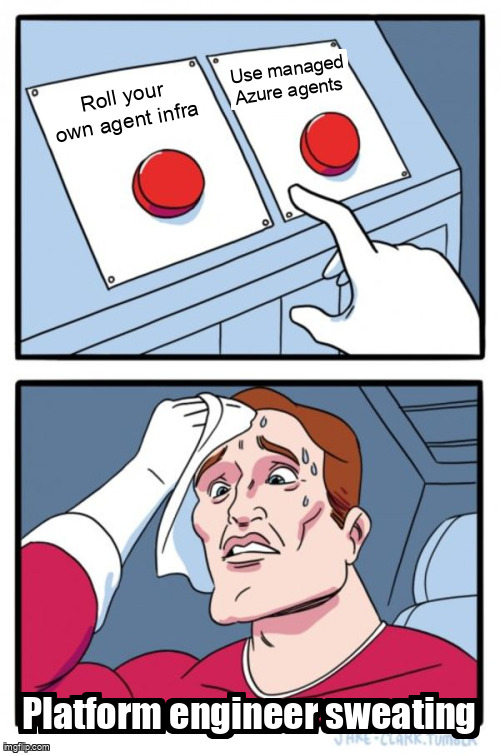
3) Azure’s agent story shifts from SDKs to systems
Microsoft Build 2026 messaging continued to land this week: AI is moving from experiments to connected systems. The Azure team emphasized shared context, governed data, and production-scale agents rather than one-off prompts. (azure.microsoft.com)
Related, InfoQ covered Azure Logic Apps Automation, a new managed SKU that bundles workflows, AI agents, connectors, and model access into a SaaS-style experience. (infoq.com)
Why engineers should care:
- Latency & ops: Managed agents reduce glue code and hosting decisions.
- Cost: You trade infra control for predictable billing.
- Integration: Native connectors to Azure services beat custom orchestration—most days.
4) .NET + agents: the platform is ready, expectations are higher
The June .NET servicing releases didn’t introduce flashy AI features, but that’s the point: stability is the feature when agents start modifying real codebases. (devblogs.microsoft.com)
Combined with Build sessions on agentic web apps and AI building blocks, the message is that .NET 11-era tooling is “agent-ready” by default. (devblogs.microsoft.com)
Engineering reality check:
- Agents amplify whatever quality bar you already have.
- Weak tests + autonomous refactors = exciting new outages.
- Strong CI + clear contracts = boring, beautiful automation.
What to prep for next week (and the rest of 2026)
- Budget for agents, not prompts. Token math is being replaced by job-level pricing and managed SKUs.
- Decide where agents run. IDE, CI, Azure-managed, or all three?
- Treat agents like junior engineers. Permissions, reviews, and guardrails matter.
- Watch API stability. Copilot SDK GA is a signal—but previews are still everywhere.
If 2025 was about trying AI, 2026 is shaping up to be about operating it—on-call rotations included.
Further reading
- https://github.blog/changelog/2026-06-02-copilot-sdk-is-now-generally-available/
- https://github.blog/changelog/2026-06-04-agent-tasks-rest-api-now-available-for-copilot-pro-pro-and-max/
- https://github.blog/changelog/label/copilot/
- https://learn.microsoft.com/en-us/visualstudio/releases/2026/release-notes
- https://azure.microsoft.com/en-us/blog/3-things-leaders-need-to-know-from-microsoft-build-2026/
- https://www.infoq.com/news/2026/06/azure-logic-apps-automation/